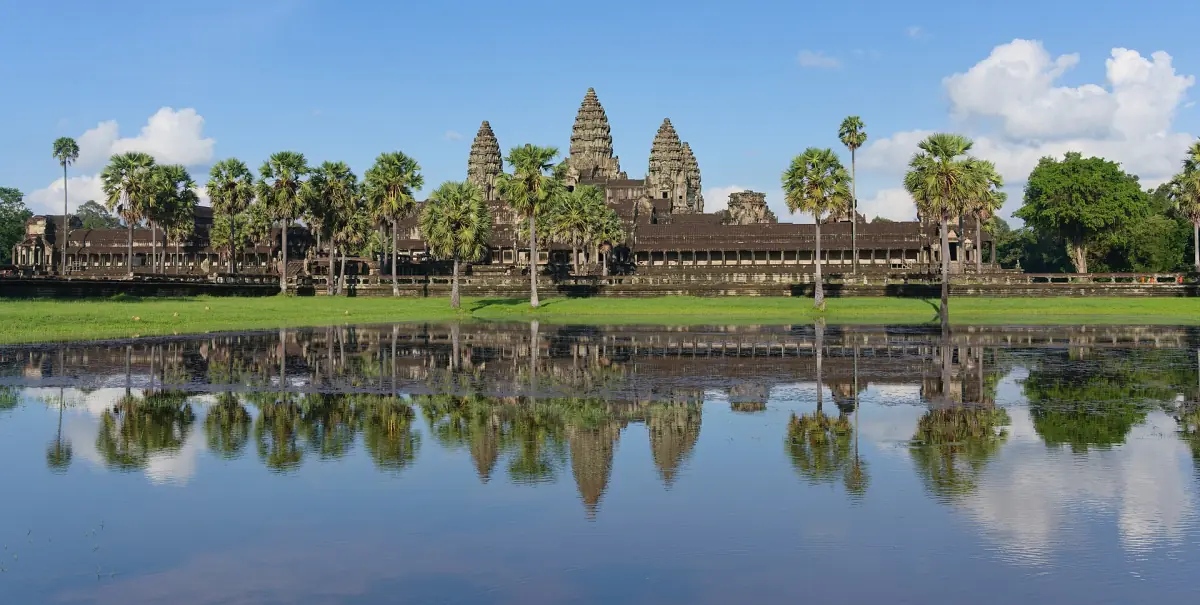
Best time to visit Angkor Wat in short
Angkor has two main seasons. The drier phase runs roughly from November to April. The wetter phase runs roughly from May to October. The change between them does not happen on a fixed day, so the months at the edges can go either way.
The figures here are for Siem Reap, the town next to the park. They do not describe the whole of Cambodia. If you want the numbers month by month, see the Siem Reap weather page. Once you know your season, compare Angkor Wat tours.
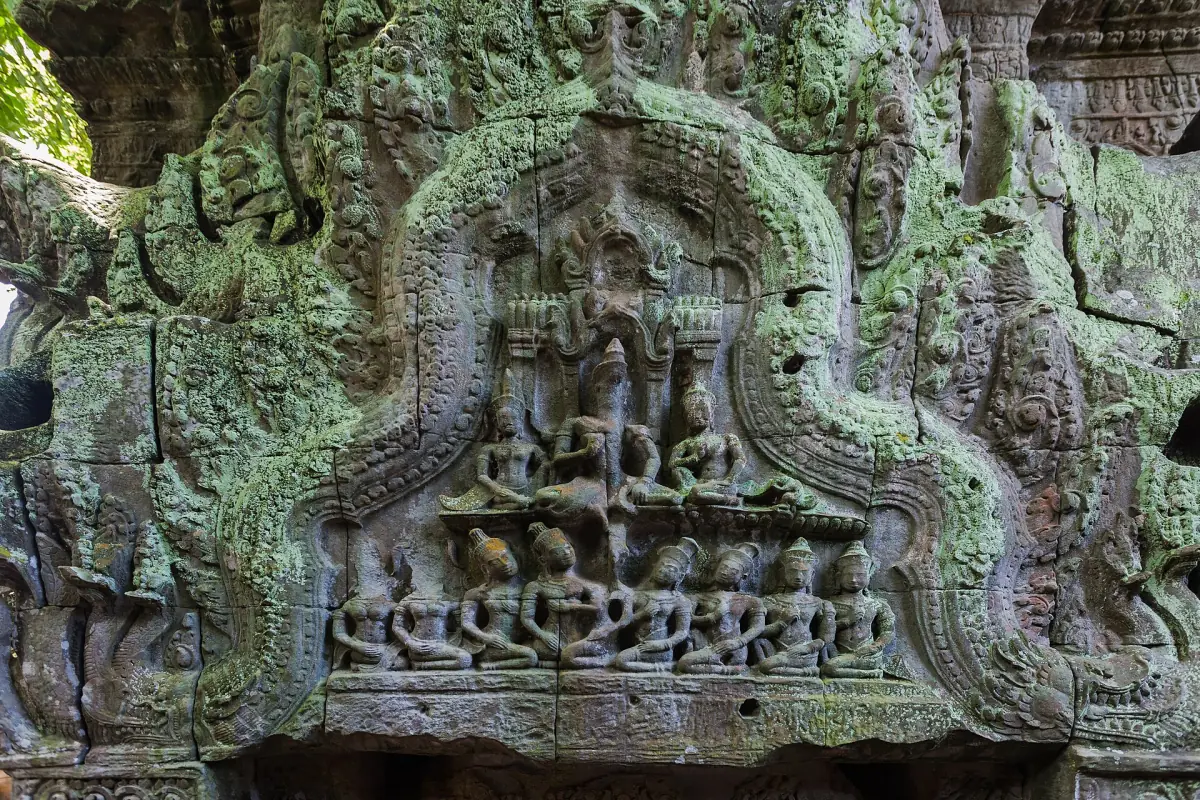
Dry season and rainy season compared
Long-term monthly averages for Siem Reap. They are not a forecast for your dates.
| Dry season | Rainy season | |
|---|---|---|
| Months | November to April | May to October |
| Rain per month | 4 to 62 mm | 143 to 305 mm |
| Average daily high | 30.7 to 34.8 °C | 31.3 to 35.3 °C |
| Average daily low | 20.0 to 23.9 °C | 22.4 to 25.1 °C |
| Good for | Long days of walking between temples | Green surroundings |
| Watch for | Strong sun, especially from March | Slippery stone, sudden downpours |
For most visitors who want to walk a lot, the dry months from November to February are the easiest choice. They have the least rain and the lowest temperatures of the year. If you can only come in the wet months, you can still see everything. Plan around the weather instead of against it.
Our pick: sunset on the lake
In the wetter months, the Tonle Sap is full and the sunset boat is a good use of an afternoon.
Hand-picked tours, booked through GetYourGuide. Prices are indicative starting prices in US dollars (as of October 2026). Tap a tour for live availability and the current price in your currency.
Angkor tours for any season
Sunrise tours, small groups, private guides and tuk-tuk days around Angkor, with live prices and availability.
Season by season
What to expect and how to plan.
November to February: drier and cooler
Rain is low, from about 4 mm in January to about 62 mm in November. January has the coolest mornings, with an average low of 20.0 °C. Days are still warm, with highs above 30 °C. Rain is rarely a reason to stay away in these months.
March to May: the hottest months
Average highs climb from 34.6 °C in March to 35.3 °C in May, the highest monthly figure of the year. Start early, rest in the middle of the day and carry water. An average is not the highest temperature of a day, and it feels hotter in the sun between temples. Early starts are easy to combine with a sunrise visit.
June to August: wet but not constant
Rain averages between about 170 and 195 mm a month. Highs are around 32 to 33 °C. Bring a light rain jacket, shoes with a good grip and a bag cover for your camera or phone.
September and October: the wettest
September has the highest average rain of the year, about 305 mm. October still averages about 227 mm. Temple stone is slippery when wet. Park guidance for the rainy season asks visitors to wear shoes with good grip, to follow warning signs and to take care in strong wind, because branches and trees can fall. Do not park or shelter under large trees in a storm.
Water on the Tonle Sap
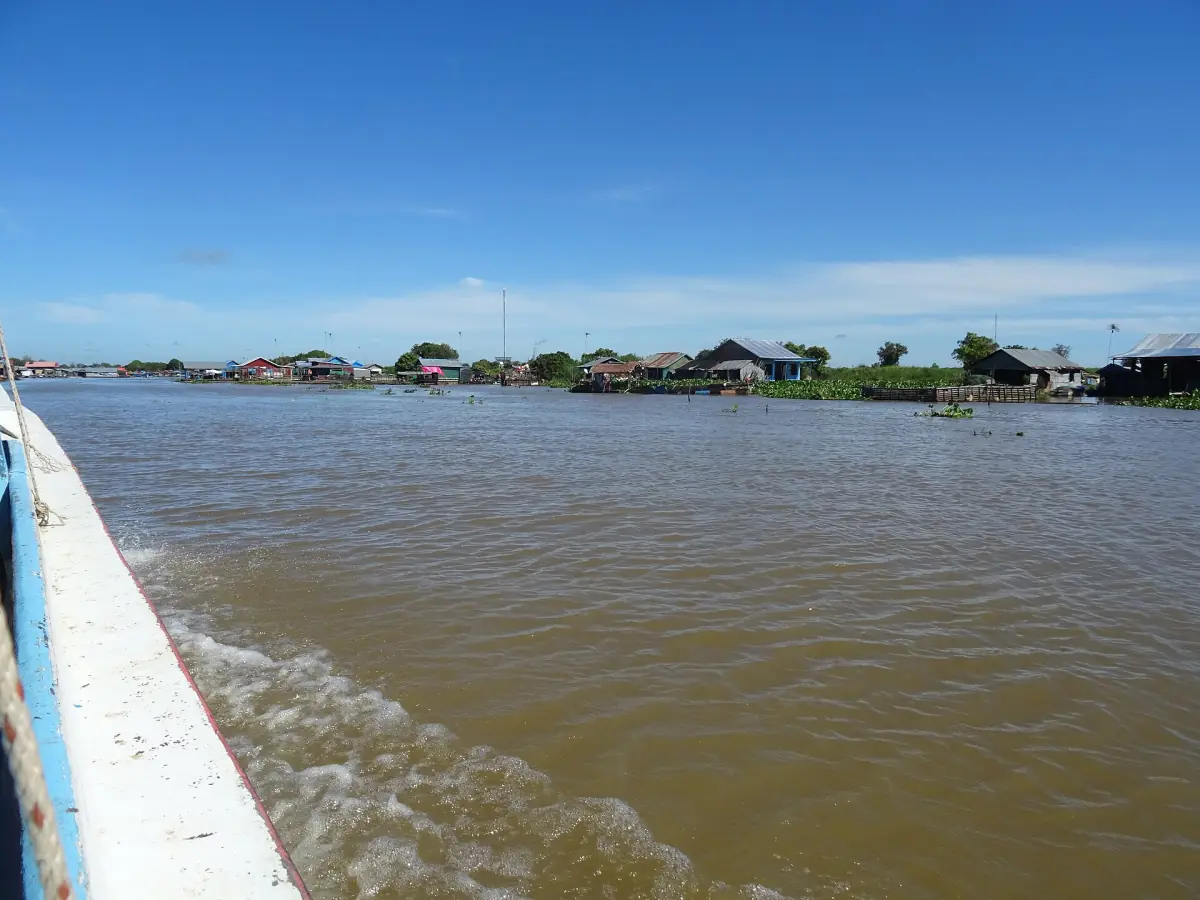
The season matters for the lake as well as the temples. Water on the Tonle Sap is high roughly from August to November and falls strongly from March to May. Boat trips to the stilt-house villages and rowing trips in the flooded forest depend on the actual water level.
If a boat trip is high on your list, read the Tonle Sap guide and ask your operator what is possible on your dates.
Crowds and how to avoid them
The timetable of the day matters more than the month.
Crowds follow the time of day more than the month, so plan by the clock. The general park window runs from 05:00 to 18:30. Go to the busiest sites early or late, and spread the big sites over two or three days. See the itinerary page for ideas.
Best time to visit Angkor Wat: frequently asked questions
What is the best month to visit Angkor Wat?
For lower rain and cooler mornings, December and January are the easiest months. Rain averages only 7 mm in December and 4 mm in January. Any month from November to April is a sound choice for walking.
Is it worth visiting in the rainy season?
Yes, if you are flexible. Showers can be heavy, but the temples stay open and the surroundings are green. Take a rain jacket and shoes with a good grip, and be careful on wet stone.
What is the hottest month at Angkor?
May has the highest average daily high of the year, 35.3 °C. March and April are close behind at 34.6 and 34.8 °C. Every month has an average high above 30 °C.
When is the water high on the Tonle Sap?
Roughly from August to November. Water falls strongly from March to May, and rowing trips depend on the real level.
How much is the Angkor Pass in 2026?
The standard prices for foreign visitors are $37 for one day, $62 for three days and $72 for seven days. Check the tickets page for the current rules before you buy.
Is this the official Angkor website?
No. This is an independent travel guide. It is not the website of the APSARA National Authority, Angkor Enterprise or the Ministry of Tourism of Cambodia, and it is not connected to any tour operator or hotel.