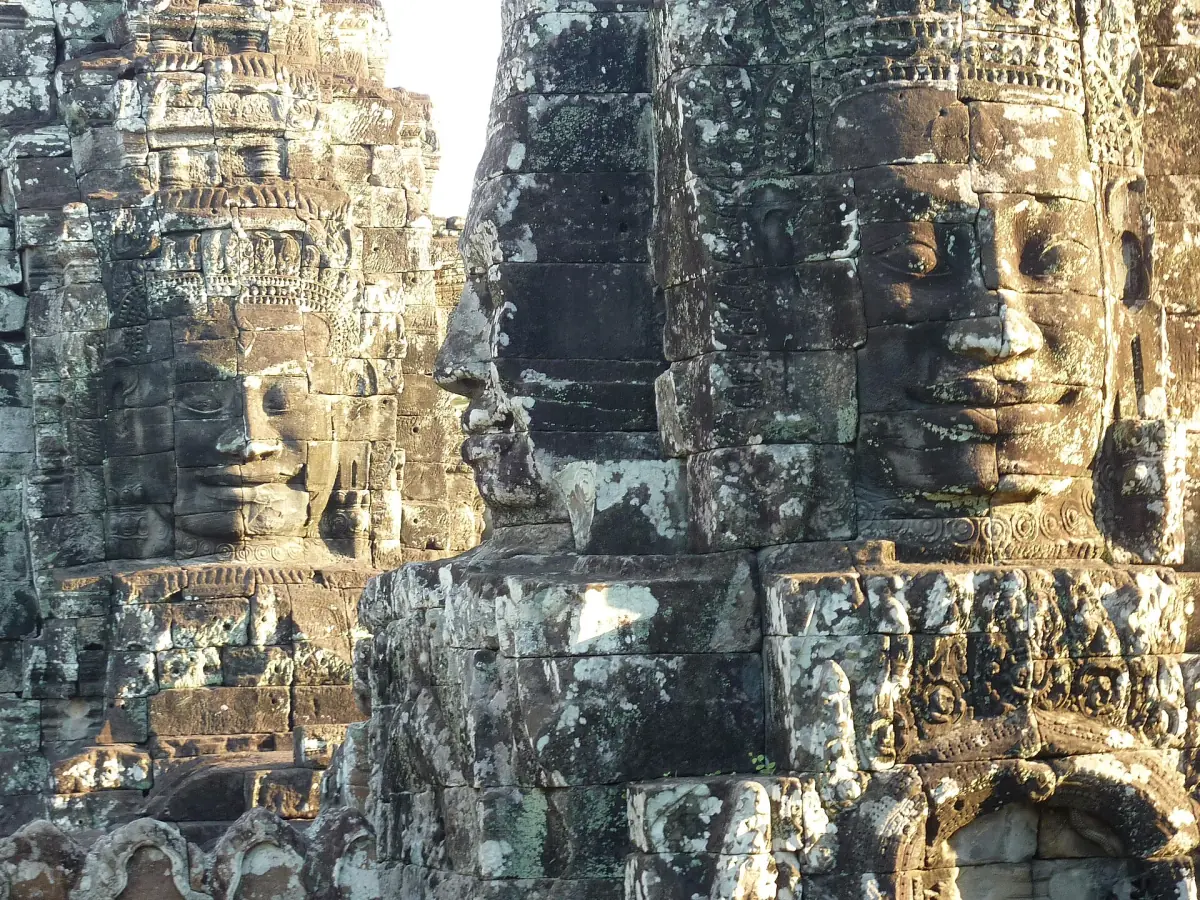
Bayon Temple at a glance
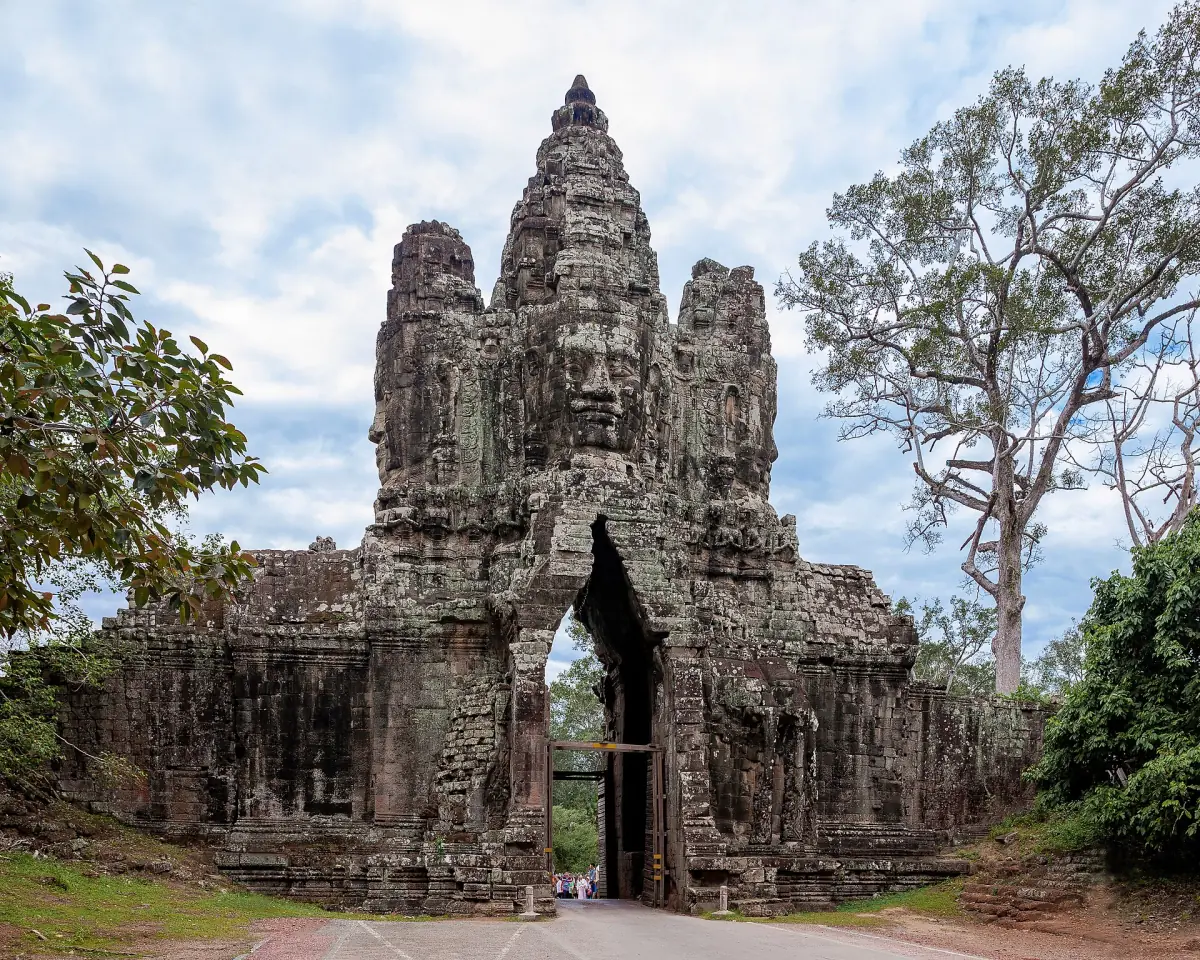
The Bayon stands at the center of Angkor Thom, the walled former capital north of Angkor Wat. Jayavarman VII built it in the late 12th and early 13th century as a Mahayana Buddhist state temple. Later rulers changed it for other religious uses. Today it is known for its towers, each carrying large smiling faces.
You visit the Bayon with the Angkor Pass: $37 for one day, $62 for three days (valid within 7 days) or $72 for seven days (valid within 30 days), 2026 prices. Children under 12 enter free. The temple sits on the small circuit, so it combines easily with the rest of Angkor Thom and with a day of Angkor Wat tours that include a guide for the reliefs. The faces, the bas-reliefs and visiting times are covered in more detail in the Bayon guide.
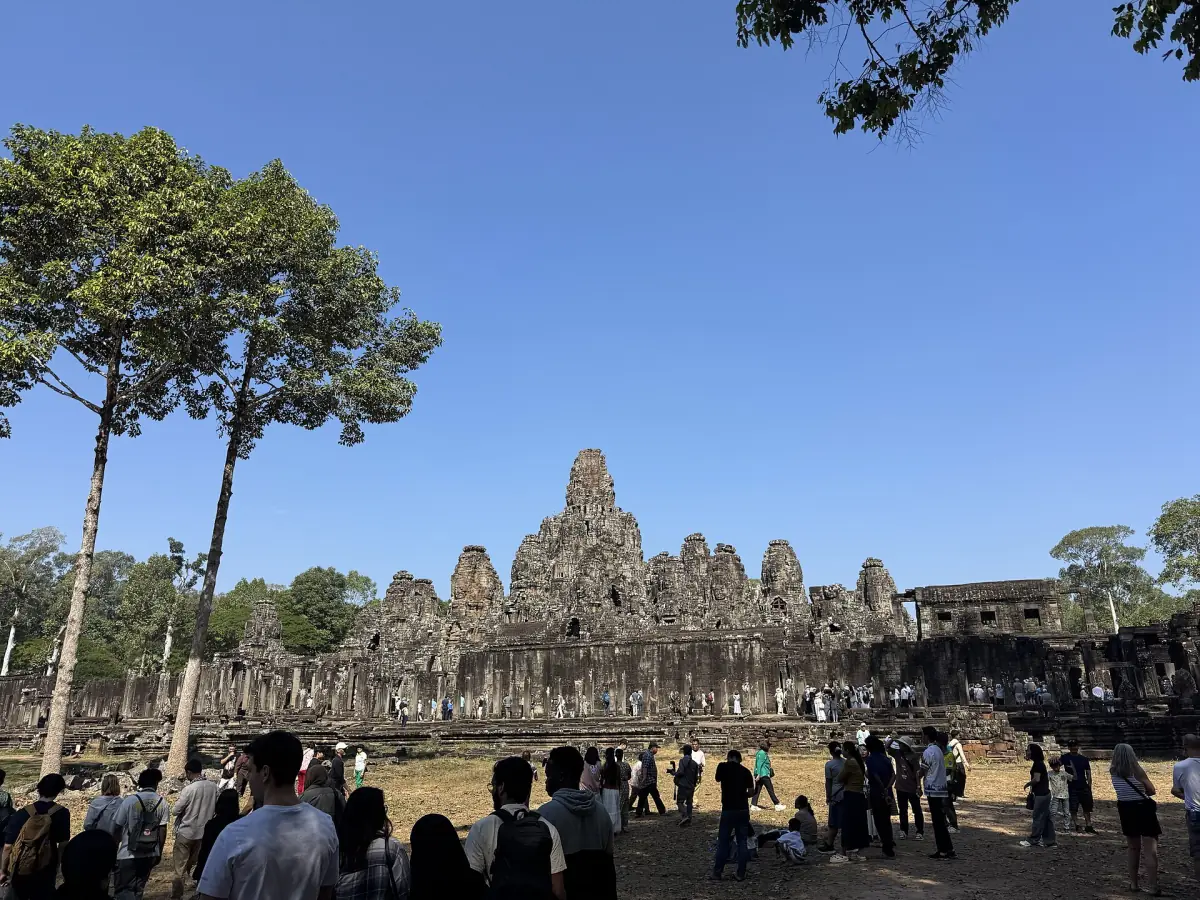
The faces of the Bayon
Several towers rise from the temple's upper levels, and each carries faces looking in different directions. Estimates of the original number of towers range between 49 and 54, and about 37 survive. The count of faces is over 200. Because the figures depend on how the ruins are counted, treat any exact number you hear as an estimate.
Who the faces show is debated. Some see the bodhisattva Lokesvara, others a portrait of the ruler. You do not need to decide. Walk around the towers and watch how the faces change as the light moves.
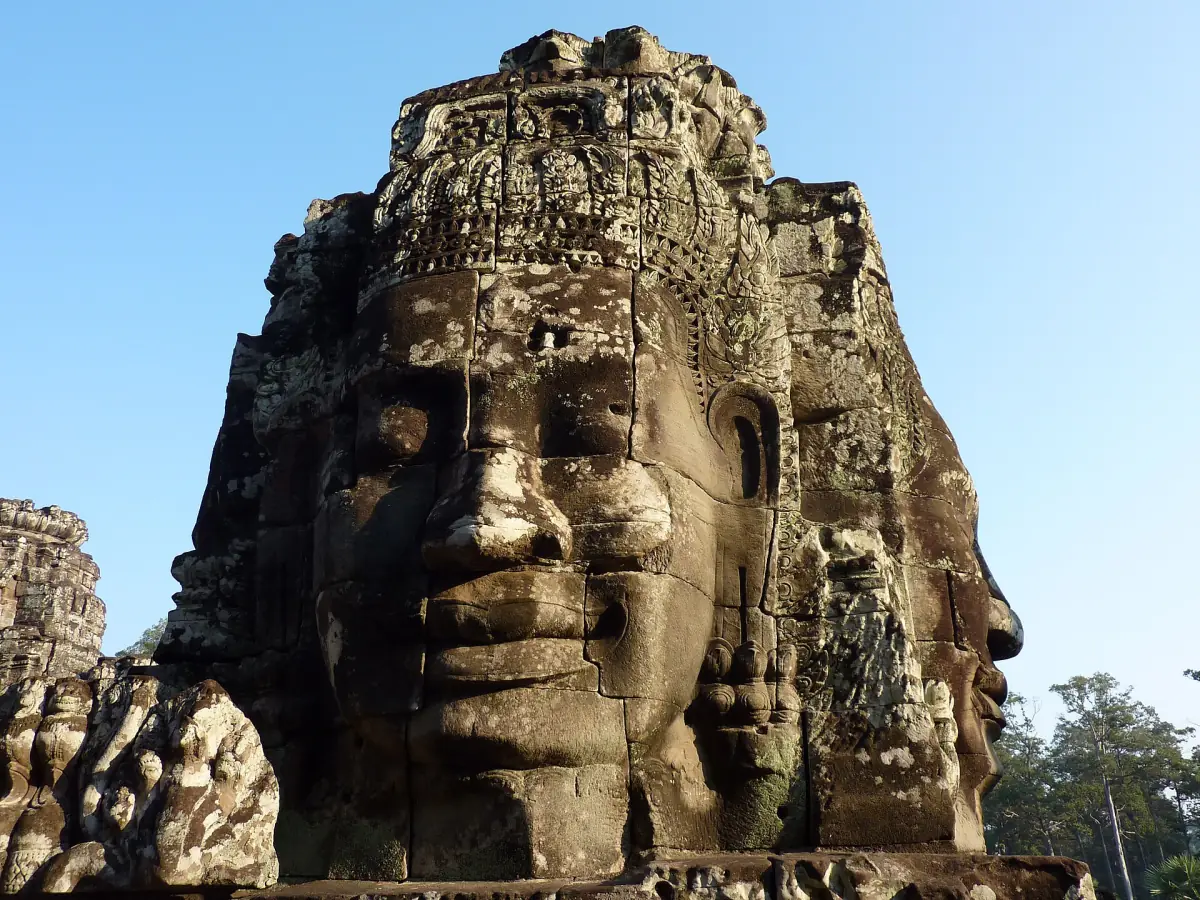
Our pick: the Bayon after sunrise
After sunrise at Angkor Wat, this tour goes on to the Bayon and the south gate.
Hand-picked tours, booked through GetYourGuide. Prices are indicative starting prices in US dollars (as of October 2026). Tap a tour for live availability and the current price in your currency.
Bayon and Angkor Thom tours
Guided temple days, small-group tours and tuk-tuk tours that include the Bayon, with live prices and availability. Check whether the Angkor Pass is included.
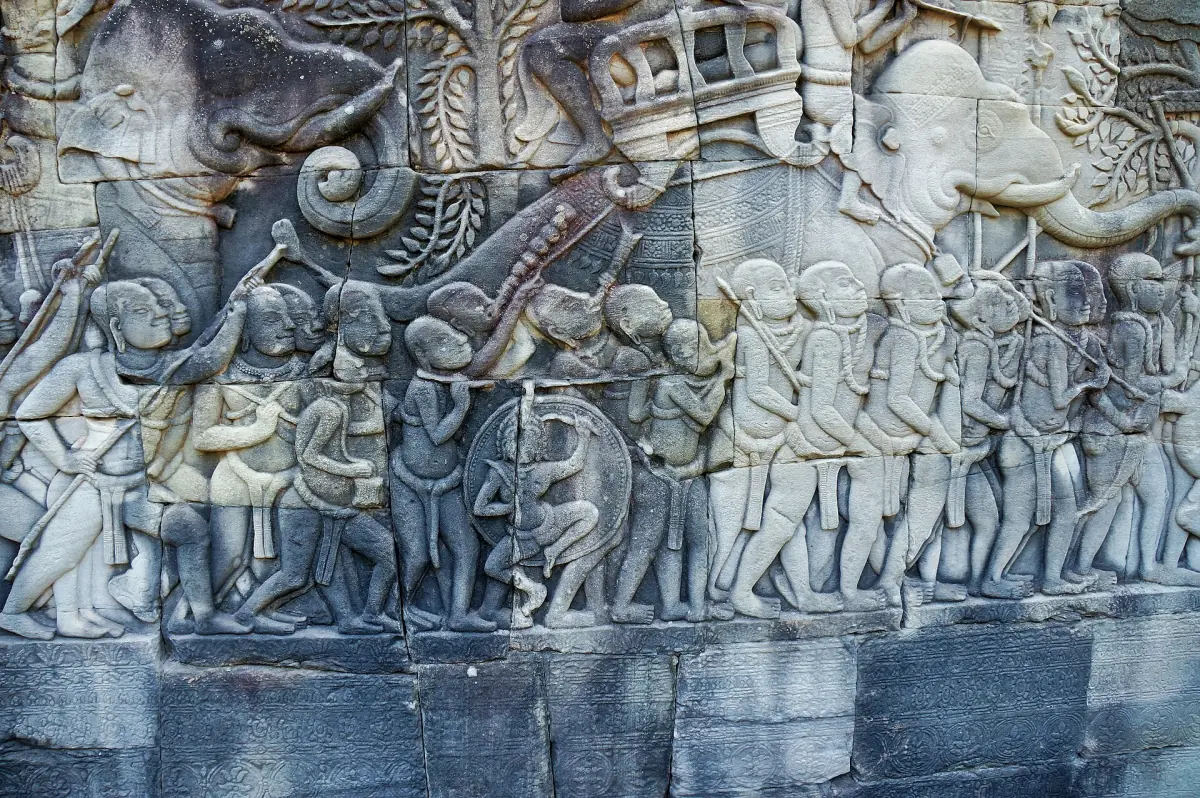
Reliefs on the outer walls
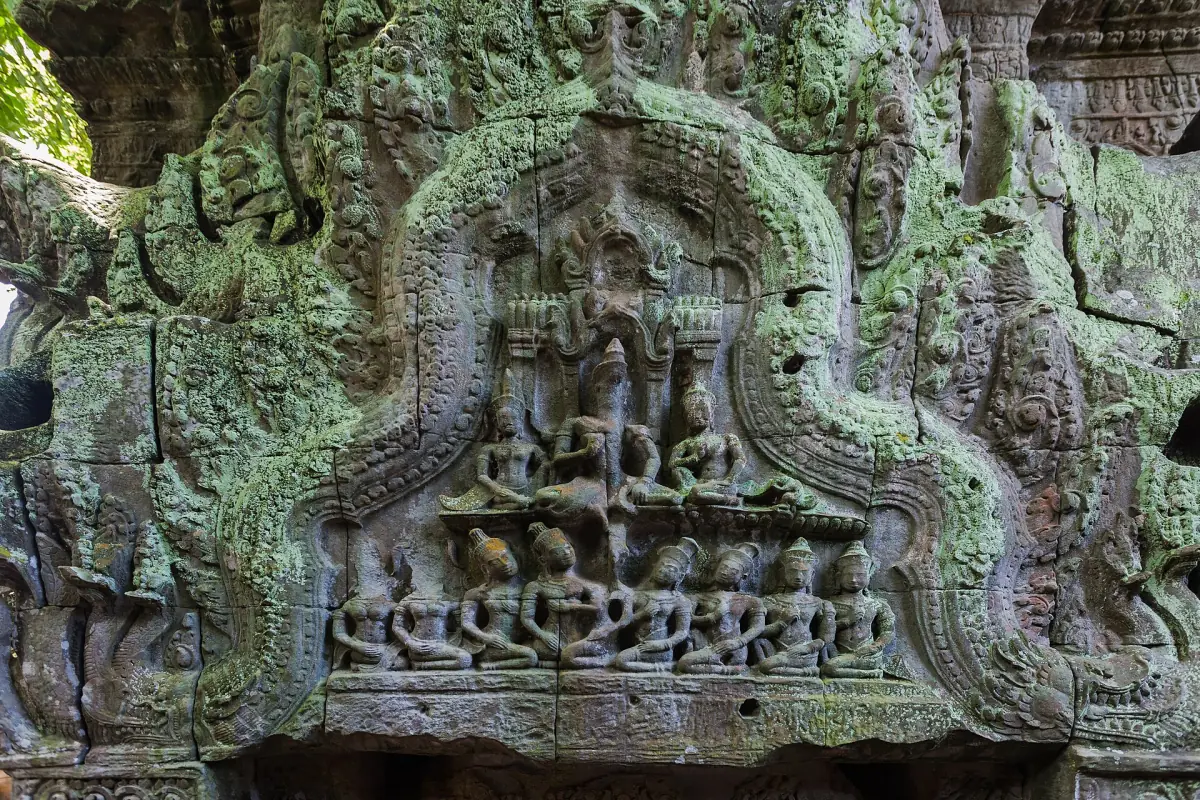
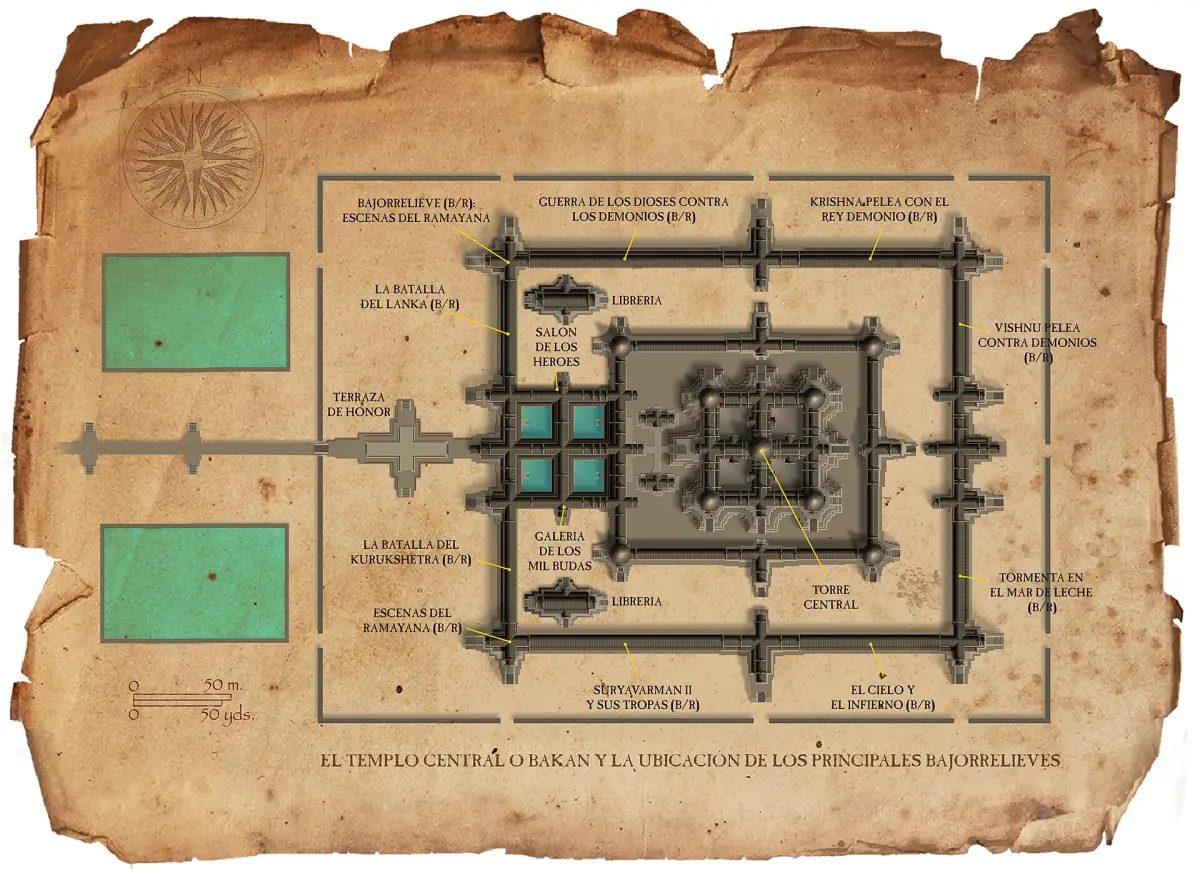
The outer galleries of the Bayon carry reliefs with scenes from daily life, war and religion. One shows a battle on the Tonle Sap. Others show everyday scenes, so you see ordinary life next to the great events.
A guide helps here, because the carvings are small and dense. If you go alone, pick one section of wall and read it slowly.
When and how to visit the Bayon
Most temples on the small and grand circuits open 06:00–18:30. Confirm the hours at the gate.
Early morning
Early light is softer on the faces, and the day is cooler. Plan to arrive when the temple opens.
Sunrise at Angkor Wat →Late afternoon
Low light makes the carved faces stand out. This also works if you spent the morning at other temples.
Angkor itinerary →Combine with Angkor Thom
The South Gate, the Baphuon and the royal terraces are all within a short ride or walk of the Bayon.
Angkor Thom →Access to the towers and terraces
Visitor paths have been set up at the Bayon, but not every terrace is open at all times. Whether you can reach the upper level on your day depends on works and crowd control. Ask at the entrance or with your guide, and do not plan your photos around a particular spot.
The Bayon is a religious site. Cover shoulders and knees, do not touch reliefs, do not step on loose stones and respect barriers. If you meet monks, ask before you take a photo.
Read the Angkor Pass guide for prices and where to buy. You can buy the pass on the official ticket website, in the app, at ticket machines or at the counters. The one-day pass needs no photo, while the three-day and seven-day passes do. Tickets are checked at the temples, so keep yours with you.
Bayon Temple: frequently asked questions
How many faces does the Bayon have?
Over 200. The number of towers is estimated at 49 to 54 originally, with about 37 surviving. Exact counts vary with how the ruins are counted.
Is the Bayon included in the Angkor Pass?
Yes, you visit it with the Angkor Pass: $37 for one day, $62 for three days within 7 days, $72 for seven days within 30 days (2026). Children under 12 are free.
Can I go up to the top terrace?
Access to terraces can change. Ask at the entrance or with your guide on the day.
Who built the Bayon?
Jayavarman VII, in the late 12th and early 13th century, as a Mahayana Buddhist state temple.
Is a guide worth it at the Bayon?
For the reliefs, yes. The carvings are dense, and explanations of the scenes make the visit richer. The faces you can enjoy without one.
Is this the official Bayon website?
No. This is an independent travel guide, not connected to the APSARA National Authority, Angkor Enterprise, the Ministry of Tourism or any tour operator.